Skip to content

Best Cybersecurity for Small Businesses: Essential Tips for 2025
Key Takeaways
- Cybersecurity for small businesses in 2025 is more critical than ever, as cybercriminals increasingly target SMBs.
- The biggest risks include phishing, ransomware, outdated software, and weak passwords.
- A robust cybersecurity strategy includes risk assessment, strong policies, employee training, and the right technology defenses.
- Partnering with a Managed Service Provider (MSP) gives small businesses access to enterprise-grade protection at predictable costs.
Introduction: Cybersecurity in 2025
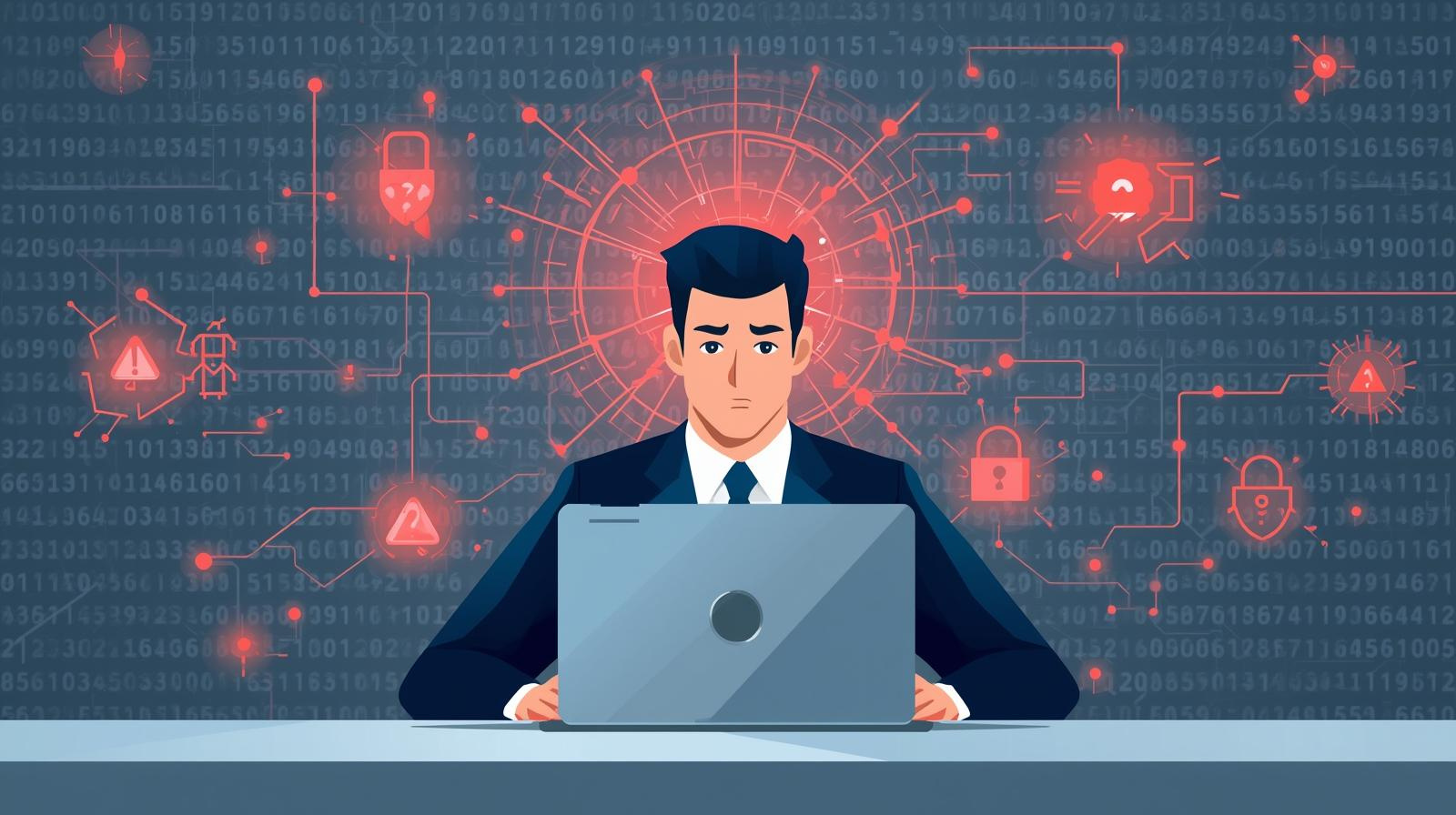
Owning a small business has never been more challenging — or more rewarding. But in today’s digital-first world, one of the biggest risks you face isn’t from competitors or economic uncertainty. It’s from cybercriminals.
In 2025, cybersecurity for small businesses has become mission-critical. Threats once thought to be limited to large enterprises now hit SMBs daily. According to this Verizon data breach report, 43% of cyberattacks target small businesses. Hackers know small businesses often lack the same defenses, making them attractive targets.
At Abantu Tech Solutions, we believe technology should empower your growth — not leave you vulnerable. That’s why we’ve created this guide to help you strengthen your cybersecurity strategy, protect your data, and keep your business resilient.
Understanding Cybersecurity Risks for Small Businesses
Before you can protect your business, you need to know where the risks come from.
Common Threats in 2025
- Phishing Attacks: Hackers use emails, texts, and phone calls to trick employees into clicking malicious links or giving up credentials. AI-driven phishing campaigns in 2025 are so convincing that even tech-savvy users can be fooled.
- Ransomware: Criminals lock your data and demand payment. Ransomware attacks continue to evolve, with double extortion tactics (data theft + encryption) becoming the norm.
- Data Breaches: Unauthorized access to sensitive data — whether customer records or financial information — can lead to fines, reputational damage, and loss of trust.
- Business Email Compromise (BEC): Sophisticated scams trick employees into transferring funds or revealing financial details.
Small businesses are prime targets because they often lack layered defenses. Recognizing these risks is the first step in reducing exposure.
The Cost of Cyber Incidents
The financial and operational fallout from a cyberattack can be devastating:
- Direct costs: Paying for IT recovery, software fixes, or even ransom demands.
- Legal and compliance fines: Non-compliance with laws like PIPEDA in Canada or GDPR in Europe can bring heavy penalties.
- Lost productivity: Downtime during recovery can halt operations for days.
- Reputation damage: Customers lose trust quickly after a breach — sometimes permanently.
In 2025, the average cost of a ransomware attack on a small business is projected to exceed $200,000. For many SMBs, that’s a threat to survival.
Developing a Cybersecurity Plan
A strong cybersecurity plan isn’t just about tools. It’s about strategy, people, and process.
1. Risk Assessment and Management
- Identify what sensitive data you handle (customer info, financial records, IP).
- Map out the systems that support your operations (cloud apps, servers, endpoints).
- Assess how vulnerable these assets are and prioritize protections.
An MSP can conduct a cybersecurity assessment, highlighting gaps and providing a roadmap for remediation.
2. Developing Security Policies
Policies make security practical and enforceable. Key areas to cover:
- Password requirements and rotation policies.
- Acceptable use of company devices and networks.
- Rules for accessing and sharing sensitive data.
- Role-based access controls (who can access what).
Policies should be documented, regularly updated, and clearly communicated across the business.
3. Employee Training and Awareness
Employees remain the weakest link in cybersecurity — but also your strongest defense when trained.
- Run quarterly training on phishing awareness.
- Simulate phishing attempts to keep staff alert.
- Encourage employees to report suspicious messages.
A culture of security starts with awareness. At Abantu Tech, we encourage SMBs to make security part of everyday business conversations, not just an IT issue.
Technological Defenses Every Small Business Needs

Technology provides the foundation for cybersecurity for small businesses. In 2025, the following are essential:
Firewalls and Encryption
- A properly configured firewall blocks unauthorized traffic before it reaches your network.
- Encryption ensures sensitive data is unreadable without authorization — protecting files, emails, and cloud-stored data.
Antivirus and Anti-Malware Tools
- Enterprise-grade antivirus detects and removes viruses, worms, and trojans.
- Anti-malware adds an extra layer of defense against spyware and ransomware.
- These tools must be regularly updated to counter emerging threats.
Secure Wi-Fi Networks
- Protect your Wi-Fi with WPA3 encryption and a strong, unique password.
- Limit access to known devices and update router firmware.
- Segment guest Wi-Fi from business-critical systems.
Multi-Factor Authentication (MFA)
Passwords alone are no longer enough. MFA — using a second factor like a mobile app or biometric check — blocks most account takeover attempts.
In this Cisco blog post, Cisco experts stress using strong passwords and enabling MFA as crucial steps to protect endpoints.
Incident Response and Recovery
No system is perfect. What matters is how quickly you respond when an incident occurs.
Creating an Incident Response Plan
An Incident Response Plan (IRP) should clearly define:
- Roles and responsibilities in a cyber incident.
- Steps for containing, eradicating, and recovering from an attack.
- Communication protocols for employees, clients, and stakeholders.
Regularly test your IRP with tabletop exercises and update it as threats evolve.
Data Backup and Recovery Strategies
Follow the 3-2-1 rule:
- 3 copies of your data
- 2 different storage formats
- 1 copy stored off-site or in the cloud
Automated backups, tested regularly, ensure business continuity even in the face of ransomware or hardware failure.
Why Small Businesses Should Partner With an MSP
Cybersecurity for small businesses is complex and constantly changing. Most SMBs don’t have the budget to build an in-house security team. That’s where a Managed Service Provider (MSP) comes in.
An MSP provides:
- 24/7 monitoring and response to threats.
- Proactive patching and updates to close vulnerabilities.
- Security awareness training tailored to your employees.
- Backup and disaster recovery planning for resilience.
- Strategic IT guidance to align security with business goals.
With predictable monthly costs, MSPs bring enterprise-level cybersecurity within reach for SMBs.
The Bottom Line
Cybersecurity is no longer optional for small businesses in 2025. The risks are real, the costs are high, and the consequences of inaction can be devastating.
By developing a strong plan, investing in the right tools, and partnering with an MSP, you can transform cybersecurity from a point of stress into a source of confidence.
At Abantu Tech Solutions, we don’t just secure systems. We empower teams, protect progress, and enable businesses to thrive with confidence.
Ready to strengthen your cybersecurity? Contact Abantu Tech Solutions today to start the conversation.