Skip to content

Human Risk: The Biggest Cybersecurity Challenge for Small Businesses

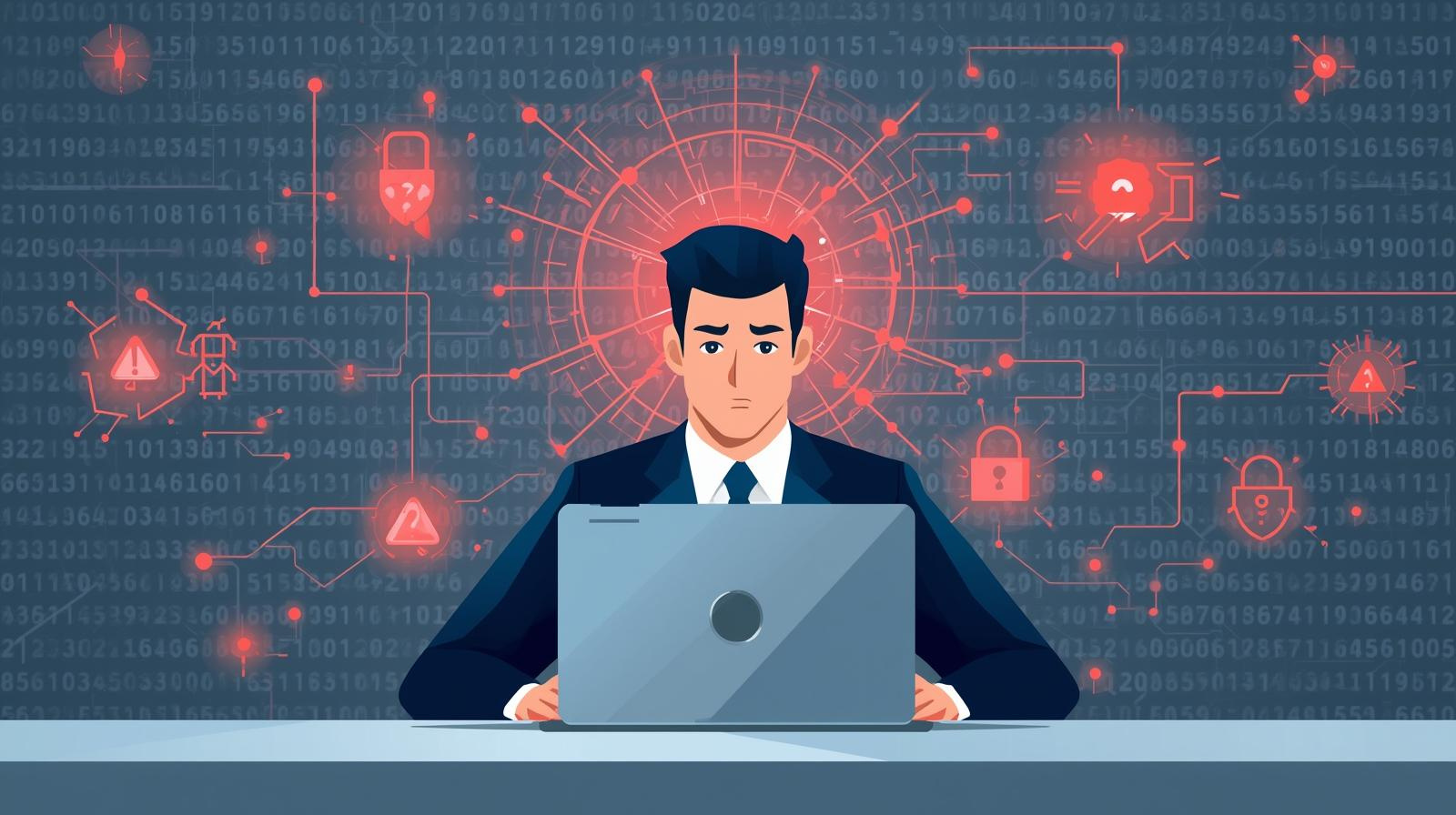
Technology doesn’t click links — people do.
No matter how strong your firewalls, backups, or antivirus tools are, one distracted employee can open the door to a costly cyberattack.
For small and mid-sized businesses, that human element — mistakes, curiosity, or misplaced trust — is now the biggest attack surface.
Let’s explore why that’s true, and what you can do about it.
What Does “Human Risk” Really Mean?
“Human risk” isn’t about bad employees — it’s about everyday people doing normal things that hackers exploit.
It includes:
- Clicking a phishing link that looks like it came from a real vendor.
- Using the same password on multiple sites.
- Forgetting to lock a laptop or report a suspicious email.
- Uploading data to the wrong cloud folder.
These aren’t rare mistakes — they happen daily in workplaces of every size.
But for a small business, even one slip can bring operations to a halt.
The Numbers Behind the Problem
According to the Canadian Centre for Cyber Security, human error is responsible for nearly 90% of data breaches in small businesses.
And a 2024 Verizon Data Breach Report found that social engineering (tricking people into giving access) is still the most common attack vector worldwide.
That’s why focusing only on technology isn’t enough.
The real solution is to reduce human risk — by building smarter habits, stronger awareness, and shared responsibility across your team.
Why Hackers Target People Instead of Systems
Modern business tools — from Microsoft 365 to cloud firewalls — are getting harder to break.
So cybercriminals found an easier way: they go after humans.
Here’s why:
- People are easier to fool than machines.
A convincing fake invoice or email can bypass even the best filters. - Humans multitask.
Distraction leads to missed warning signs — especially in busy workplaces. - We trust too easily.
A message that seems urgent from the “CEO” or “CRA” can trigger panic responses.
In short, hackers don’t need to “hack” your network — they just need to hack your people.
Common Human Weak Spots in Small Businesses
1. Phishing and Social Engineering
Emails or texts that look legitimate but carry malicious links.
Example: “Your Microsoft account is expiring. Click here to renew.”
A single click can compromise your credentials or infect your network.
2. Weak or Reused Passwords
Employees juggling multiple logins often reuse the same password everywhere — a hacker’s dream.
3. Lack of Awareness
New staff might not understand company security policies, or remote workers might skip updates and patches.
4. Overconfidence
Some teams assume “we’re too small to be a target.”
That mindset keeps them from investing in simple preventive measures like multi-factor authentication or regular training.
How to Reduce Human Risk in Your Business
You can’t remove human error entirely but you can design your environment so that one mistake doesn’t become a disaster.
Here’s how:
1. Build a Security-First Culture
Encourage everyone — not just IT — to take ownership of security.
Reward employees for spotting suspicious activity.
Make it okay to ask, “Does this look safe?”
2. Train Regularly, Not Once
Replace long annual training with short, quarterly refreshers.
Use real-world examples like phishing tests and quick quizzes.
Abantu Tech offers automated awareness training programs designed for busy teams.
3. Use Tools That Support Good Habits
- Enable multi-factor authentication (MFA) everywhere.
- Use password managers to generate and store strong passwords.
- Keep software updated automatically to close known vulnerabilities.
4. Simulate Attacks — Safely
Run mock phishing campaigns to see how staff react.
If someone clicks, use it as a learning opportunity, not a punishment.
5. Have a Response Plan
Mistakes happen — what matters is how quickly you react.
Make sure your team knows who to contact and what to do if they suspect a breach.
Abantu Tech helps clients create simple, step-by-step incident response playbooks.
Real-World Example
Imagine one of your staff clicked a fake “CRA refund” email.
Within minutes, your entire network could be compromised and client data leaking to an unknown location in the cloud.
With 24/7 monitoring and MFA in place, this user’s account can be locked down immediately, credentials changed, and the attacker’s IP blocked.
That one click can cost you thousands.
Setting yourself up with real targetted and effective staff security awareness training can avoid a scenario like this.
Technology + Training = True Protection
Firewalls and antivirus are still essential but they’re only half the equation.
The other half is empowered, aware people who understand the value of data security.
At Abantu Tech Solutions, we help small businesses reduce human risk through:
✅ Security awareness training
✅ 24/7 monitoring and reporting
✅ Phishing simulations and response planning
✅ User access controls and compliance alignment
Because when your people are confident, your business is resilient.
Key Takeaway
Human error will always exist but it doesn’t have to be your biggest weakness.
By investing in your people and creating a culture of awareness, you transform your biggest risk into your strongest defense.
Empower your team. Enable progress. That’s the Abantu way.