Skip to content


Creating a Lasting Security Culture in Your Small Business

We often tell our clients that technology can only protect you so far. The real strength lies in the people.
Firewalls, antivirus tools, and backups are essential, but the truth is this:
A single click on a phishing email can undo thousands of dollars in protection.
That’s why creating a lasting security culture in your business isn’t optional — it’s essential.
Whether you run a local accounting firm, retail store, or engineering consultancy in Ottawa, your people are your first line of defense. In this guide, we’ll show you how to turn cybersecurity from “IT’s job” into everyone’s responsibility.
What Is a Security Culture — and Why It Matters
A security culture means that every person in your business — from the owner to the newest hire — understands that data protection is part of their daily job.
It’s not just about having policies; it’s about mindset.
A healthy security culture makes employees:
- Think before clicking on suspicious links.
- Report potential issues without fear.
- Treat customer information as carefully as cash.
- Feel responsible for keeping the business safe.
When your team truly values security, breaches become less likely, downtime drops, and your reputation stays strong — even under pressure.
The Challenge for Small Businesses
Many small businesses in Ontario face the same roadblocks:
- Limited time for training.
- Staff wearing many hats.
- A belief that “we’re too small to be targeted.”
Unfortunately, cybercriminals know that smaller organizations often have weaker defenses — and they take advantage.
According to the Canadian Centre for Cyber Security, 70% of small businesses have experienced at least one cyber incident.
Building a strong security culture protects not just your systems, but your ability to serve your customers and keep their trust.
Step 1: Start from the Top
Culture begins with leadership. If you treat cybersecurity as an afterthought, your employees will too.
Lead by Example
- Use multi-factor authentication (MFA) on your own accounts.
- Take part in security training sessions.
- Talk openly about security in meetings — not just when something goes wrong.
When leadership shows commitment, the rest of the team follows.
Make Security a Business Priority
Frame cybersecurity as a business enabler — not an obstacle.
Strong security means fewer interruptions, smoother operations, and better client confidence.
Step 2: Make Awareness Training Practical (and Regular)
Annual training alone doesn’t cut it. Employees forget, rules change, and threats evolve.
Make It Continuous
- Hold short, quarterly refreshers instead of long annual sessions.
- Include real-world examples of local scams or phishing attempts.
- Use micro-training platforms that take less than 10 minutes per session.
Keep It Relevant
People engage when they see themselves in the example.
- For your front desk staff, show how to verify caller identities.
- For your finance team, explain how to spot invoice fraud.
- For your marketing staff, highlight the risks of shared cloud drives.
Reward, Don’t Punish
Celebrate those who report suspicious activity early.
Positive reinforcement builds confidence and makes people more likely to speak up next time.
Step 3: Create Simple, Clear Security Policies
Complex policies collect dust.
Effective ones are short, practical, and easy to follow.
Key Policies Every Small Business Should Have
- Acceptable Use Policy – Defines how to use work devices and internet safely.
- Password Policy – Encourages strong passwords and regular updates.
- Remote Work Policy – Outlines how to access company systems securely off-site.
- Incident Response Plan – Details what to do and who to contact if something goes wrong.
Abantu Tech helps clients document these policies in plain English, so everyone — not just IT staff — can understand and follow them.
Step 4: Train for Real-World Threats
Theory doesn’t build habits — practice does.
Phishing Simulations
Run safe, fake phishing campaigns to test awareness.
When someone clicks, turn it into a learning moment, not a punishment.
Tabletop Exercises
Gather your team once a year and walk through a “what-if” scenario:
- What if someone’s laptop gets stolen?
- What if ransomware locks your files?
- What if you accidentally email customer data to the wrong person?
Talking through these situations builds muscle memory for when real issues arise.
Step 5: Build Security into Everyday Tools
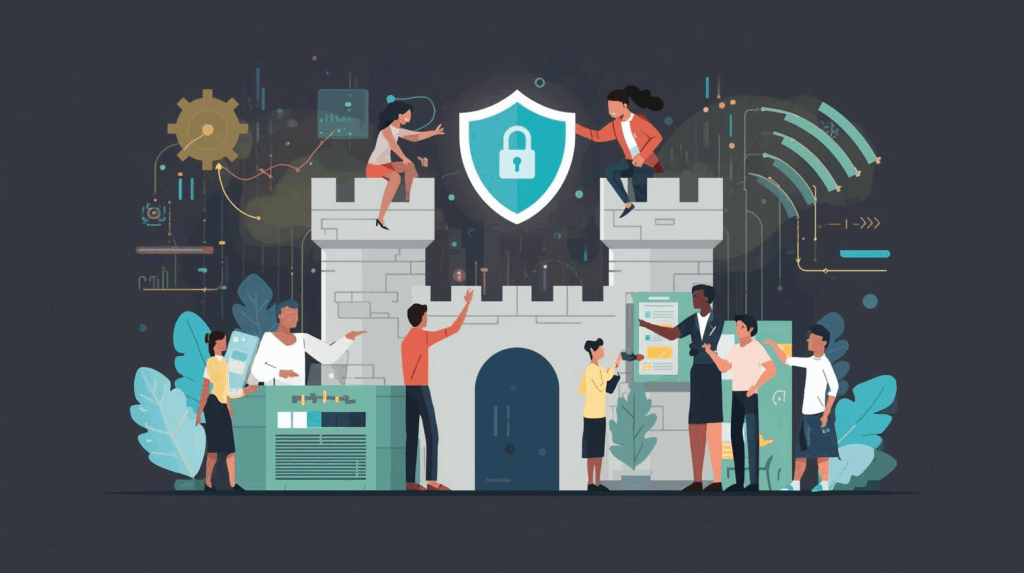
People can’t follow good security habits if the tools make it hard.
Make it easy for your team to do the right thing.
- Use password managers to remove password fatigue.
- Automate updates and patches so systems stay secure.
- Implement MFA for all critical accounts.
- Use secure file-sharing platforms instead of email attachments.
A well-configured system supports good behaviour — not frustration.
Step 6: Keep Measuring, Keep Improving
Culture isn’t built overnight.
You’ll know your security culture is working when:
- Employees report suspicious emails instead of ignoring them.
- Fewer accounts need password resets.
- Policy reminders are followed, not resisted.
Review progress every quarter with your IT partner.
At Abantu Tech, we track security awareness trends, phishing test results, and incident reports to measure growth and find new opportunities for improvement.
Step 7: Partner with a Trusted MSP
Small businesses often lack the time and tools to maintain a full-scale security program.
That’s where a Managed IT Service Provider comes in.
At Abantu Tech Solutions, we:
✅ Monitor your systems 24/7 for suspicious activity.
✅ Run ongoing phishing and awareness training.
✅ Maintain your compliance documentation.
✅ Provide local support right here in Ottawa when you need it.
Together, we make security a shared responsibility — not a burden.
The Lasting Impact of a Security-First Culture
When your business embraces security as part of its identity, everything gets stronger:
- Customers trust you more.
- Employees feel empowered, not blamed.
- You respond faster when threats appear.
It’s not about being perfect — it’s about being prepared.
Start small, build steadily, and keep learning.
That’s how small businesses grow into resilient ones.
Empower your team. Enable progress. That’s the Abantu way.